
The Ultimate 2025 Sofa Configuration Guide
Get your free copy todayy!
When you go to a restaurant that serves the best pasta in town, do you analyze how much the tomatoes cost? Or do you just pay the price and enjoy?
Now try reversing the situation: you didn’t try their pasta. Instead, you’re comparing a spreadsheet with a list of restaurants and meal prices. What are the odds you’ll visit this specific ristorante?
That’s what happens when you try to communicate your products, but think only of numbers.
It’s good to know what we're actually trying to sell. A grand chef is not selling pasta, tomatoes, and basil leaves. They sell an experience. The better the experience, the more customers are willing to pay.
So why do most furniture brands fail to learn that lesson?
If you’ve been wondering why your B2C strategy fails, you’re not alone. Most furniture businesses still try to sell what they make - wood, fabric, or metal. But customers don’t buy those things.
Instead, they buy the feeling those materials create.
This notion extends far beyond furniture. As human beings, we’re seldom making fully rational decisions. When making a purchase decision, we’re driven by factors like self-reassurance, the pursuit of a desired social status, and fulfilling a vision of the 'perfect life'.
Which of those are addressed by your product offer? And in what way?
And before you say, “This is not for me, I’m a serious business,” remember: your customer is not.
They don’t care about your factory, your foam density, your production team’s dedication, or how many prototypes you built this year.
They care about themselves, and whether your product helps them feel a little more confident, a little more in control, or a little closer to the life they want.
Building perceived value of your furniture

In a furniture showroom, that feeling is easy to spark. People sit, touch, imagine. But the moment they walk out, the emotion begins to fade. Unless you have tools to keep that spark alive, the sale turns into a price comparison exercise. And that’s when your furniture markup becomes your biggest enemy.
I’ve watched too many brands lose deals this way. It’s not a lack of skill or design quality. It’s just that they try to sell the product, not the idea.
In September 2025, we were doing a consulting project for a small furniture manufacturer. The owner of the company seemed tired and overwhelmed. I asked him: How do they price their products? The answer: “We just calculate the materials and labor costs and add a fixed margin.” No wonder they were struggling.
When you walk into most showrooms, you'll find brands showing catalogs, fabric swatches, or price sheets. They promise “top quality” and “fair pricing.” The problem? Somebody else can always offer the same thing cheaper. That’s why selling materials kills furniture margins.
Customers don’t make decisions by comparing specs. They decide when they feel something - clarity, confidence, excitement. If you lose that, you lose the showroom closing moment.
Some brands insist on closing the deal “here and now,” while the customer is still in the showroom. It’s a short-sighted tactic. Yes, it may boost today’s numbers, but it breeds second thoughts, pressure, and the sense of being cornered. And nothing kills the joy of a new purchase faster. In the long run, it hurts the brand more than it helps, because nobody feels good about a product they were pushed into buying.
Note: If you want to better understand the buyer’s journey in modern furniture sales process (and your showroom’s position in it) - check out Furniture, Emotion, and Conversion: Inside the Customer's Mind in 2025 piece by Marcin Stempniewicz.
In our sector, I usually meet two kinds of furniture makers.
The Strugglers are material sellers. They compete on price. They hand customers fabric samples and estimates. They send them home with nothing that keeps the vision alive. They rarely win if someone offers a discount. Worth noting - this doesn’t apply to huge wholesale/B2B businesses. If you’re one of them, this is not for you.
The Winners, on the other hand, sell the idea. They help customers imagine what their living room will feel like when their product is already there. They don’t need to drop prices because customers understand value through emotion.

Imagine a simple story. A customer researches online, clicks through your website, and narrows down a few models. Everything looks similar, so they can’t tell the difference. Then they visit your showroom. Suddenly, excitement hits. They sit on the sofa, visualize it in their home, feel the texture. This is the emotional high point.

Now imagine what happens after they leave. The excitement evaporates. Within hours, they forget how that fabric looked in daylight. All that’s left in their mind is the price tag. And price triggers comparison.
That’s where 90% of furniture companies lose the battle. They let the feeling fade. Without visuals, previews, or personalized quotes, customers have no anchor to keep the memory alive. The emotional “yes” turns into a mathematical “maybe.”

This is exactly where digital transformation steps in. Tools like showroom configurators allow customers to walk away with a personalized version of the product they’ve just tried - but only if used right.
Digital tools solve one crucial problem: they keep the feeling alive. When someone gets a visual quote, with their chosen colors and setup, the mental image stays clear.
Just think of it - why did the customer come to your showroom in the first place?
I can think of at least three reasons:
Assuming your showroom experience fulfilled all the above, what’s your strategy of making sure the effect lasts?
Let’s simplify the question: what CAN be done for the enchantment effect to last?
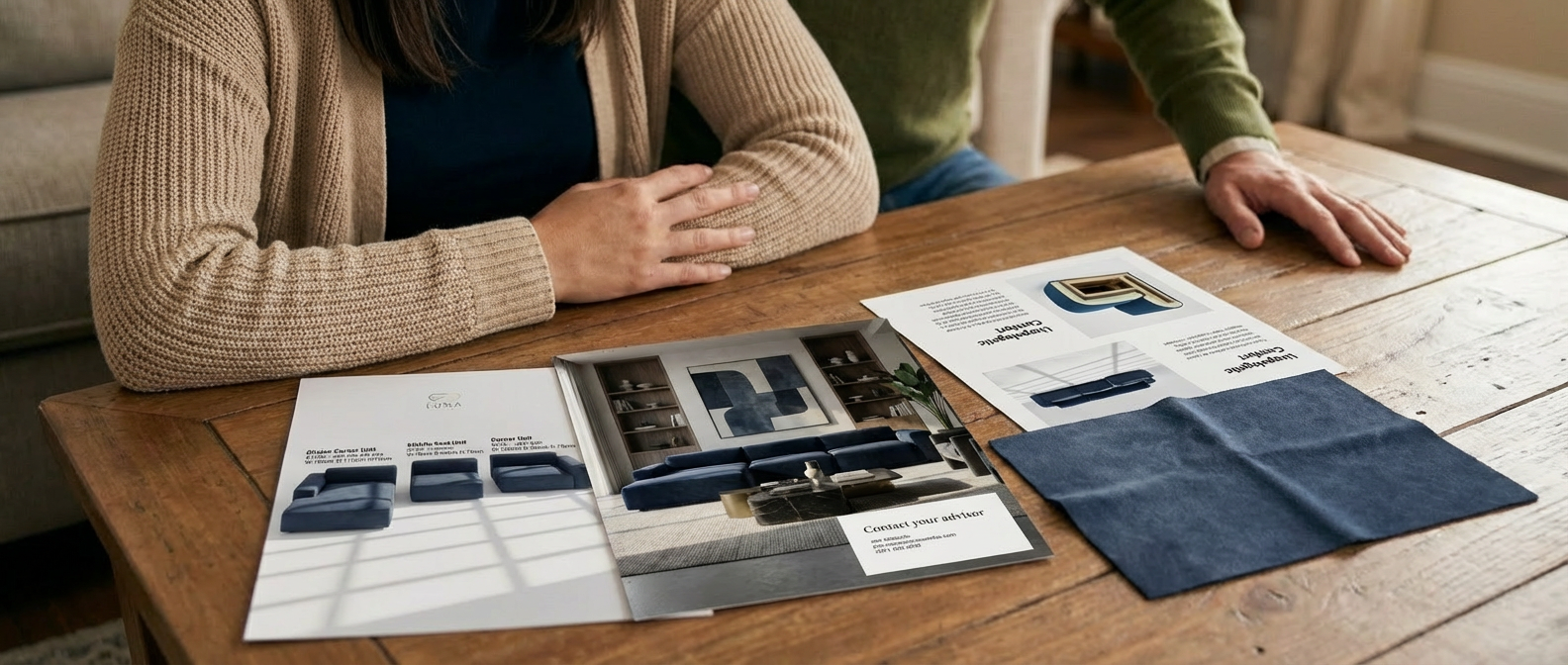
You might think I’m crazy. After all, I’m advocating delivering a customized product catalogue for each individual customer.
I’m dead serious. If all your product information is in place, it’s only a matter of time to automate it the right way:
Using automation to deliver hyper-personalized content that addresses emotions directly means you have a key to your buyers’ hearts. Imagine your brand is already following the guidelines above. Then, imagine your customers comparing what they got from your showroom, and from five of your competitors’. What do you think, what would the outcome be?


.jpg)
.jpg)
.jpg)
