A recliner is easy to photograph. The row it becomes is not.
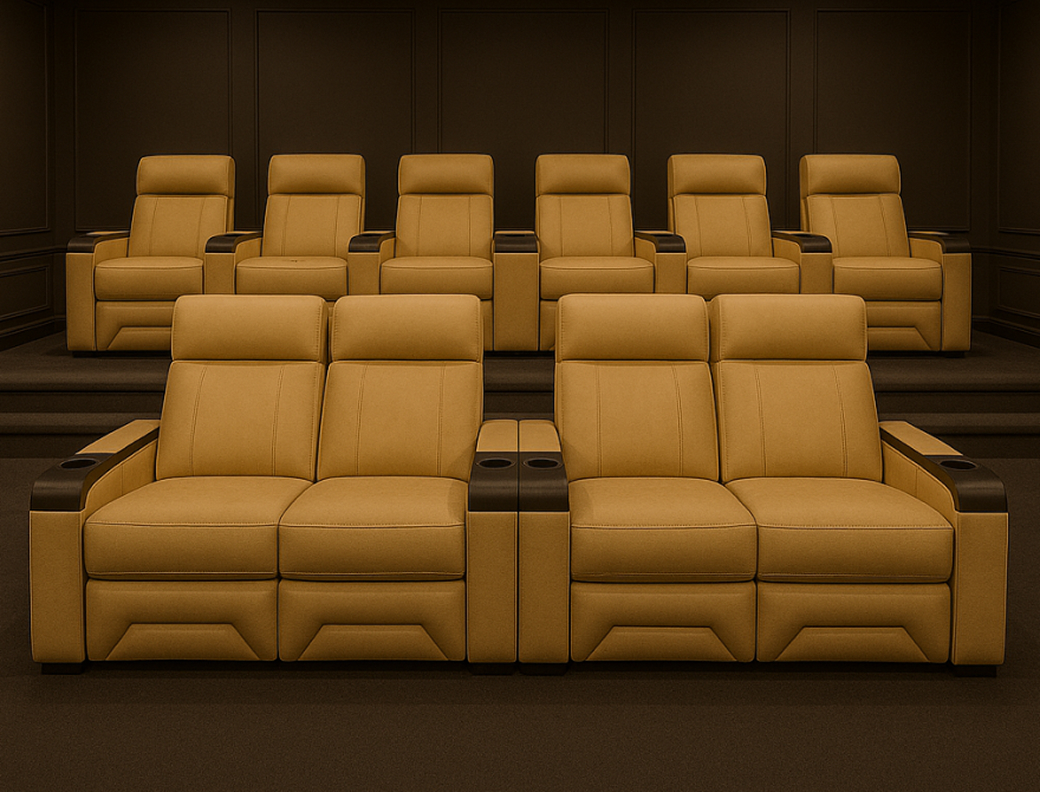
One seat or four, a wedge in the middle, a second row behind, in a leather they have to be sure about. Every combination is a different picture, and a showroom floor holds only one of them.
The unit of sale is a layout, and layouts multiply.
Seat count, wedges, consoles, risers, powered or manual, times a leather range that no showroom can stock in full. The catalogue shows one row in one hide and hopes.
Meanwhile the buyer is trying to picture their room, in their leather, and getting no help at all.
1
seat model, every arrangement
One seat, modelled once, arranged into every row you sell and rendered in every finish, the same way a modular sofa range is handled.
What changes for you
From one showroom row to the arrangement they are actually buying.
Rows are assembled, not photographed.
Two, three, four seats, wedges and consoles between them, rendered as the arrangement rather than as separate product shots.
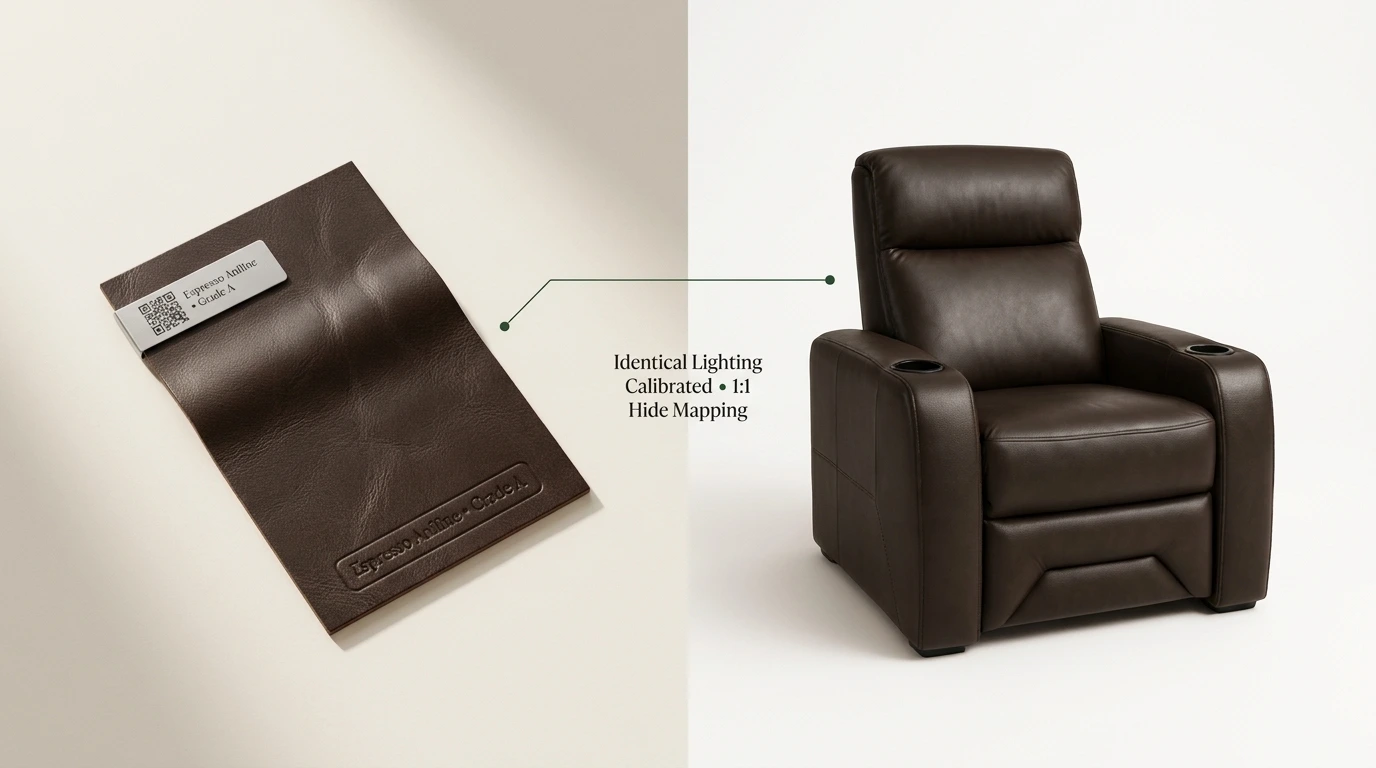
Leather stops being a swatch square.
Every hide rendered on the seat, in the same light, so a customer can compare finishes rather than compare photographs.
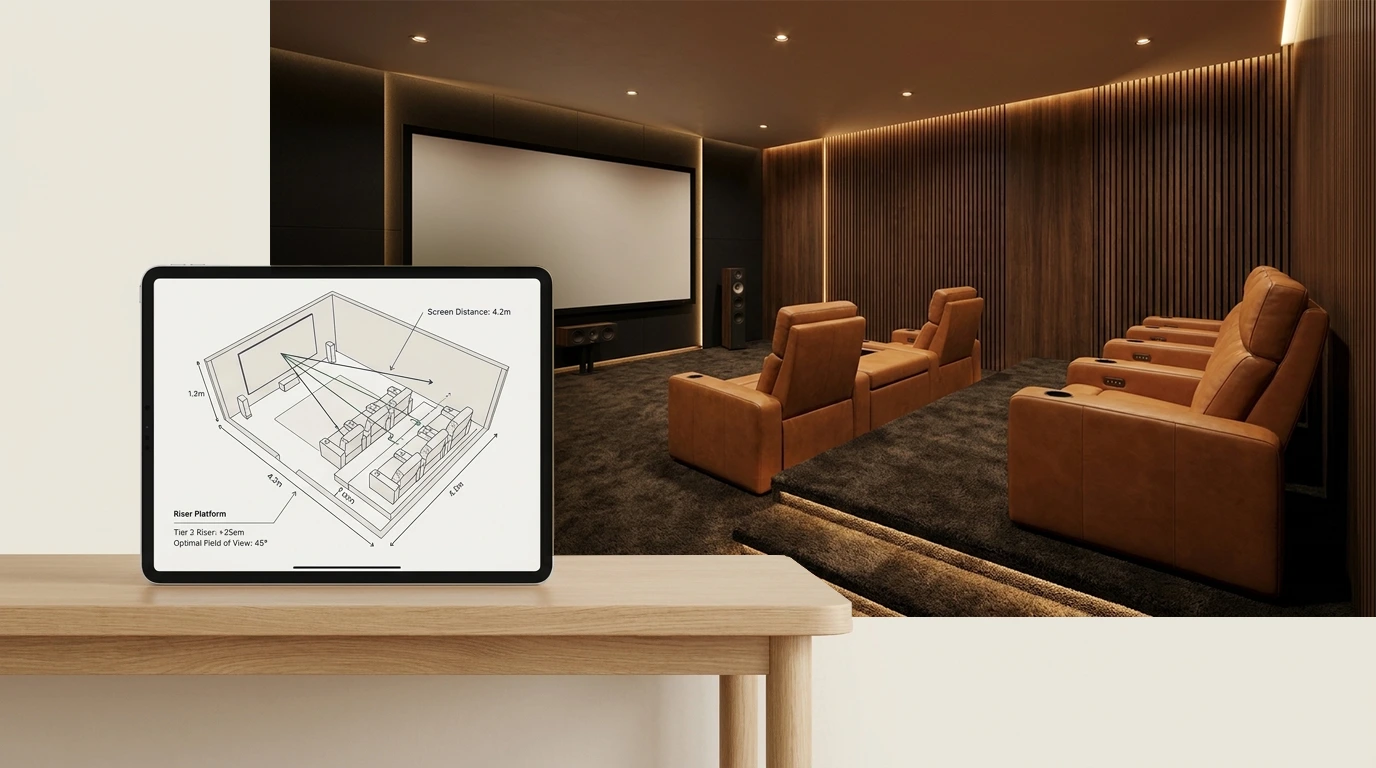
The room comes into it.
Riser platforms, spacing and screen distance are part of the sale. Showing them is what turns a chair into a cinema.
Who is actually selling
Three rooms, one catalogue.
Cinema seating is sold in a showroom, by an AV integrator, and inside an architect's drawing. Each needs something different from the same product data.
The showroom screen
Every layout and hide on the TV or tablet in front of the customer, so the two seats on the floor stop being the whole range.
The integrator's laptop
The row built on site with the client, priced as it is built, the spec leaves agreed rather than promised.
The architect's model
The configured seat downloadable as a 3D model, so it drops into the project file instead of being redrawn from a PDF.
Quotes in minutes
Configure, price, quote as one motion. The hours that went into a bespoke quotation go back into selling.
Specs that write themselves
Dimensions, power, upholstery and options generated from the configuration, so the technical sheet always matches what was sold.
Seen in the room
An AR preview of the row at full size, where riser height and screen distance stop being abstract numbers.
Case study · Elite HTS
“
Ar-range has demonstrated a high level of efficiency by always delivering a final clean product which offers high functionality and stability, all while providing timely responses and communication at a reasonable price.
Bobby Bala
CEO, Elite HTS
Challenge
Elite HTS builds premium home theatre seating to order and ships across four continents, with no showroom nearby for most buyers. Their models already ran on Sketchfab, but Sketchfab's own API has no way to turn a live configuration into a placeable AR model, then or now.
Solution / Result
A script that generates an AR-ready model from the exact configuration chosen, in real time.
Opens on a phone directly, or by QR code from a desktop, at the true scale of the piece.
The configurator's own interface reworked for touch, on iOS and Android.
The site later moved to Webflow, where we re-embedded the configurator directly on product pages, part of an ongoing partnership with Elite.
Then the configurator is a tool for the integrator. They build the row on site, in front of their client, from your catalogue.
Leather varies between hides. Is a render honest?
A render is a consistent reference, not a promise about one hide. It is more honest than a photograph taken of a single sample under studio lights.
We sell powered mechanisms that have to be demonstrated.
Show them where they matter, in motion on the product page, and let the finish and layout choices happen around them.
Do risers and platforms have to be modelled?
If you sell them, yes; they are part of the arrangement. If you do not, the row renders on the floor and nothing is lost.
Architects ask us for 3D files. Can we give them the configured seat?
Yes, and it is one of the strongest reasons to have the catalogue modelled properly: the configured product downloads as a model that drops into their project, instead of being redrawn from a specification sheet.
How long does a bespoke quote take today?
Usually hours, most of them spent checking that the options chosen actually go together. Configure-price-quote collapses that to minutes because the checking happens while the row is being built.
Our showroom has two seats on the floor. Is that a problem?
It is the problem. Two seats is not a range, the screen beside them can carry every layout and every hide, so the floor space stops deciding what you are able to sell.
Show the whole row
Send us one seat model and your leather range. You get every row, layout and finish, rendered.
1Mvariants from one source
Same dayprice changes live in the shop
No-codeconfigurators the client runs
Thank you
Your message is on its way. We will reply by email.