
Updated September 2026. This post explains how AR works and what it takes to add it. Whether it will pay off for your products is a different question, and we answer it, with the research and our own numbers, in Use of augmented reality in furniture e-commerce: where it sells and where nobody taps it. Read that one first if you are deciding whether to buy AR at all.
What AR is
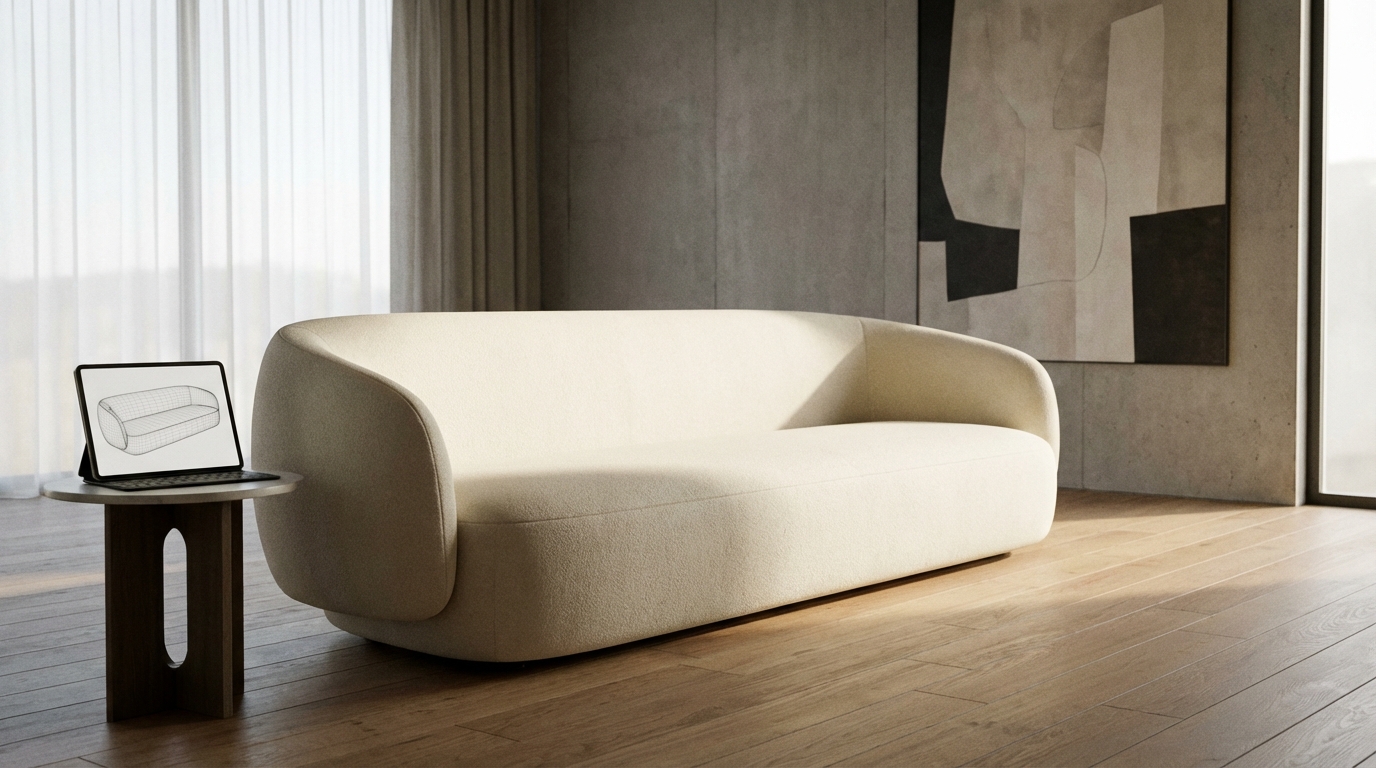
Augmented reality puts a 3D object on your phone screen, on top of what the camera sees. Point the phone at your living room, and a sofa appears on the floor, at its real size, from whatever angle you walk round to. That is the whole trick: a true-to-scale object in a real space.
What it does on a furniture product page
AR answers one question: will it fit, and how will it sit in my room. A buyer opens the product page on their phone, taps “View in your room”, and the piece is on their floor. They can walk around it, check it against the wall, the window, the other sofa.
It does that one thing well. It does two other things badly:
- Fabric. AR renders in real time on a phone, so the material is a smooth mapped cloth. The strand depth and the light in the pile that sell an upholstered piece are not there. Show fabric in a close-up render, and keep AR for size.
- Context. AR puts your product in the buyer’s room, which is often cramped, half-lit and full of other furniture. A curated room shot can sell the piece better than their own living room does.
The newer post above goes into both, with the research behind them.
Web AR or an app
Web AR opens from the product page in one tap, in the phone’s browser. An app means the app store, a download and a new interface to learn, paid for by a customer who came to buy one sofa.
An app only makes sense when customers come back often enough to spread that cost over many visits. A marketplace can do that. A brand whose customer buys a bed every ten years cannot. For the brands we work with, web AR is the only version worth building, and it is the only one we build.
Which phones support it
Any iPhone from the last several years, and most Android phones from the same period. The two makers each ship the AR layer in the operating system, so the buyer needs nothing installed. If a phone is too old for it, the page simply shows the product without the AR button.
What it costs
The AR itself is the cheap part. The cost is the 3D model of the product, and you either have one or you do not.
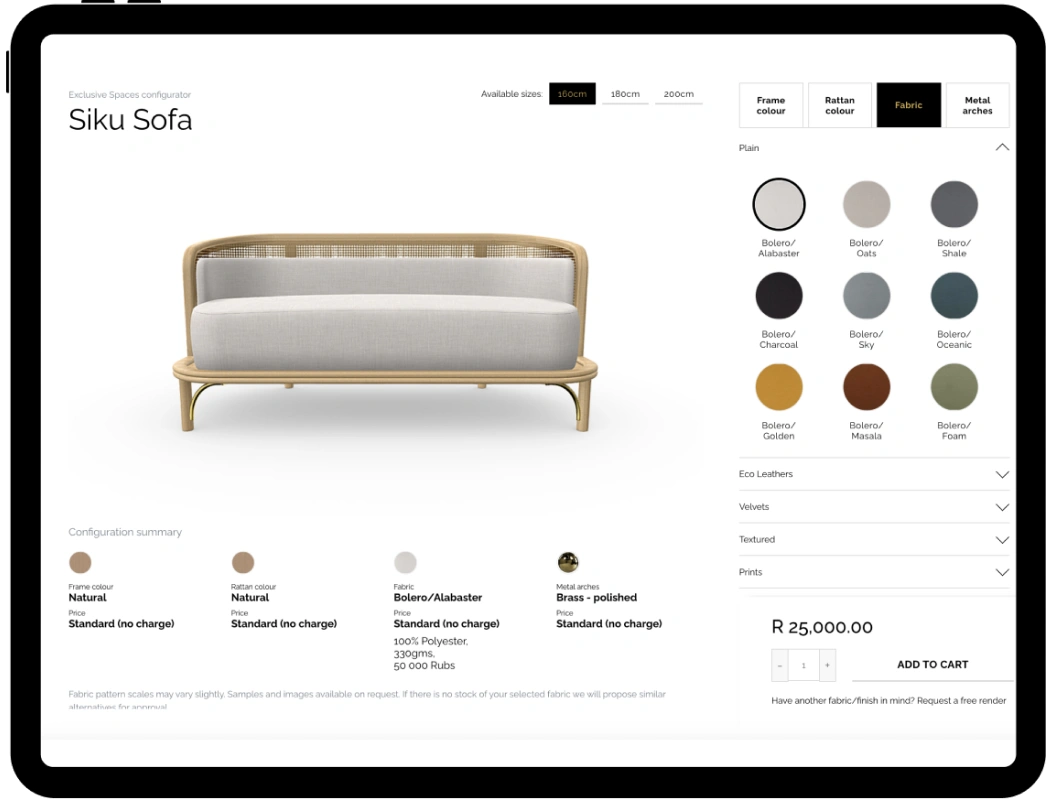
If you already have models, from your designers, your factory or a previous configurator, AR is an export from them. So are the variant images for every fabric, the close-ups, the 360 spin, the dimension drawing and the configurator scene. One model library feeds all of them, which is why the model is the thing to budget for, and AR is the least of what it produces. The Costs category puts numbers on models and renders.
If you do not have models, that is the job, and it is the same job whether you want AR, variant images or a configurator. Start there.
Three questions before you add it
- Is the buyer afraid it will not fit? A big footprint, a fixed alcove, a patio. If yes, AR can pay. If the product is judged on look, feel or price, most visitors will never tap it.
- Where does the button sit? After the buyer has decided, it confirms. Before, it gives them a reason to leave and think. Online and showroom journeys need different answers.
- Is the material the decision? If yes, AR will show it worse than a close-up does. Put the fabric somewhere else on the page.
The newer post shows what happened when we put AR on five different products, and which one worked.